


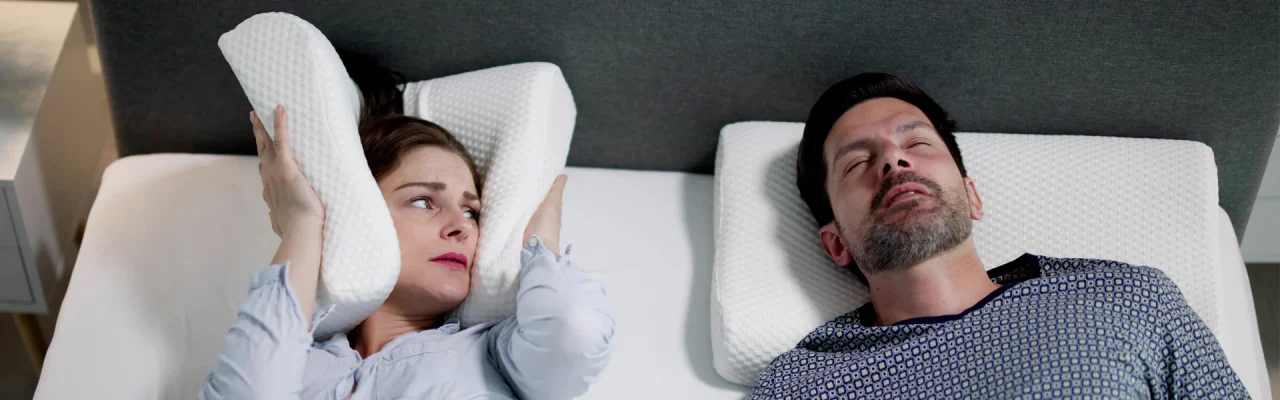
You may sleep through your own snoring, but your partner might hear something more concerning: a sudden gasp, a choking sound, or a pause before you start breathing again.
These episodes can leave you feeling tired the next morning, even after spending enough hours in bed.
A dentist trained in dental sleep medicine reviews your symptoms, examines your jaw, tongue, palate, and bite, and checks for oral conditions associated with disturbed breathing. These findings may indicate the need for further investigation. A medical provider must diagnose obstructive sleep apnea, usually with appropriate sleep testing.
What Causes Airway Problems That Lead to Snoring?
As you fall asleep, the muscles supporting your tongue and throat relax. When the upper airway narrows, passing air makes nearby soft tissues vibrate. This produces snoring.
Several factors can contribute:
- Jaw position: A lower jaw positioned farther back may reduce space behind the tongue.
- Enlarged tonsils: Additional tissue can narrow the upper airway.
- Nasal congestion: Trouble breathing through your nose can make you more likely to snore.
- Sleeping position: For some people, lying on your back can make snoring worse.
- Alcohol and sedatives: These substances may relax throat muscles.
Snoring volume doesn’t reliably indicate how serious a breathing disorder might be. Loud snoring doesn’t automatically mean you have sleep apnea.
How Does a Dentist Evaluate Airway Issues Related to Snoring?
A dental sleep consultation usually starts with questions about your nighttime breathing, morning symptoms, and daytime energy levels.
During the visit, the dentist may assess:
- Sleep history: How often you snore, whether you’ve witnessed breathing pauses, and any previous sleep testing.
- Oral anatomy: Tongue position, palate structure, and available space in the mouth.
- Jaw movement: Mobility, joint discomfort, and lower jaw position.
- Dental condition: Tooth support, bite alignment, and suitability for an oral appliance.
Dr. Silvia Lobo Lobo, DMD, MS, has advanced training in dental sleep medicine, pediatric dentistry, and orofacial pain. Her background includes evaluating jaw-related conditions that may affect how well an appliance is tolerated.
If the findings raise concern about sleep apnea, a medical assessment is needed before choosing treatment for the breathing disorder.
What Dental Signs May Point to Breathing Problems During Sleep?
Certain oral symptoms may occur alongside nighttime breathing difficulties:
- Morning dry mouth: Sometimes linked to breathing through the mouth at night.
- Worn teeth: May indicate grinding, which can coexist with sleep apnea.
- Jaw soreness: May relate to nighttime clenching.
- Morning headaches: May occur with sleep disorders, but they can have several causes.
These findings aren’t specific to airway obstruction. Medications, stress, and other conditions can produce similar symptoms.
Someone with tooth wear alone may need a different assessment than someone whose partner regularly notices gasping and interrupted breathing.
How Can Jaw Position and Tongue Placement Affect Airflow During Sleep?
Your lower jaw and tongue influence the space available in the upper airway.
When throat muscles relax, the tongue and surrounding tissues may shift backward. In susceptible individuals, this movement can narrow the passage behind the mouth.
Moving the lower jaw forward may increase airway space for some patients. Before considering an appliance, the dentist examines jaw mobility, joint health, and the way the teeth fit together.
Nasal obstruction and other anatomical factors can also contribute. Changing jaw position alone won’t resolve every case of snoring.
Can a dentist help determine whether snoring is related to Sleep Apnea?
Yes. Dentists can recognize signs of obstructive sleep apnea and refer patients for medical evaluation.
Sleep apnea involves repeated partial or complete obstruction of the upper airway during sleep. These episodes may reduce oxygen levels and disrupt normal rest.
A medical provider determines whether diagnostic testing is appropriate. Depending on the patient’s circumstances, this may involve:
- Home sleep apnea testing: Used for appropriately selected adults.
- Overnight laboratory testing: Measures breathing and other physiological signals during sleep.
An oral examination cannot establish the frequency or severity of nighttime breathing interruptions.
Treating snoring without considering sleep apnea could leave an underlying breathing disorder unrecognized.
How Do Oral Appliances Help Improve Airflow for Snoring Patients?
For suitable adults, a custom mandibular advancement device holds the lower jaw forward during sleep. This positioning may reduce airway narrowing and snoring.
Oral appliance treatment generally involves:
- Initial assessment: Checking teeth, gums, bite, and jaw joints.
- Custom fitting: Making an appliance suited to the patient’s dental anatomy.
- Gradual adjustments: Modifying jaw advancement according to tolerance and treatment response.
- Follow-up monitoring: Checking for discomfort, tooth movement, or changes in bite.
Possible side effects include jaw soreness, dry mouth, excess saliva, and gradual changes in tooth position.
For patients with diagnosed obstructive sleep apnea, follow-up sleep testing is recommended to assess treatment effectiveness. Reduced snoring alone doesn’t prove that breathing interruptions have resolved.
If you already use CPAP, speak with your sleep physician before changing or stopping prescribed treatment.
If you’re considering an oral appliance, arrange a dental sleep consultation to discuss suitability and whether medical testing is needed first.
When to Consult a Sleep Dentist for Snoring Concerns
Occasional snoring during a cold may improve once nasal congestion clears. Persistent snoring deserves attention, especially if it comes with other symptoms.
Consider medical assessment if you or your partner notices:
- Loud, frequent snoring with pauses in breathing that you witness.
- Gasping, choking, or sudden awakenings during sleep.
- Persistent tiredness despite getting enough sleep.
- Morning headaches or difficulty concentrating.
- Repeatedly waking with a dry mouth.
Adults considering snoring treatment in Auburn, MA, should have their oral health checked and any possible medical causes of snoring evaluated before starting treatment.
If you’re searching for a dentist for snoring, choose someone trained in dental sleep medicine who can work with a sleep specialist when needed.
Children need a different approach. If your child snores regularly, has pauses in breathing, or sleeps restlessly, speak with a pediatrician. Pediatric sleep dentistry may be part of their care, but adult treatments may not suit growing children.
Frequently Asked Questions About Snoring and Dental Sleep Medicine
Conclusion: Taking Snoring Seriously Starts With the Right Evaluation
Snoring deserves closer attention when it comes with gasping, breathing pauses, or persistent exhaustion. Rather than focusing only on reducing the noise, the priority is understanding whether a sleep-related breathing disorder is present.
For patients interested in sleep dentistry in Auburn, MA, a dental assessment can clarify whether oral appliance treatment may be suitable alongside appropriate medical care.
Contact Worcester Sleep Dentistry to schedule a consultation with Dr. Silvia Lobo Lobo and discuss next steps to investigate your snoring concerns.